Carpenter ant structural remediation differs fundamentally from generic surface spraying because structural wood excavation targets the nesting galleries rather than foraging trails. In Dallas County, carpenter ants…
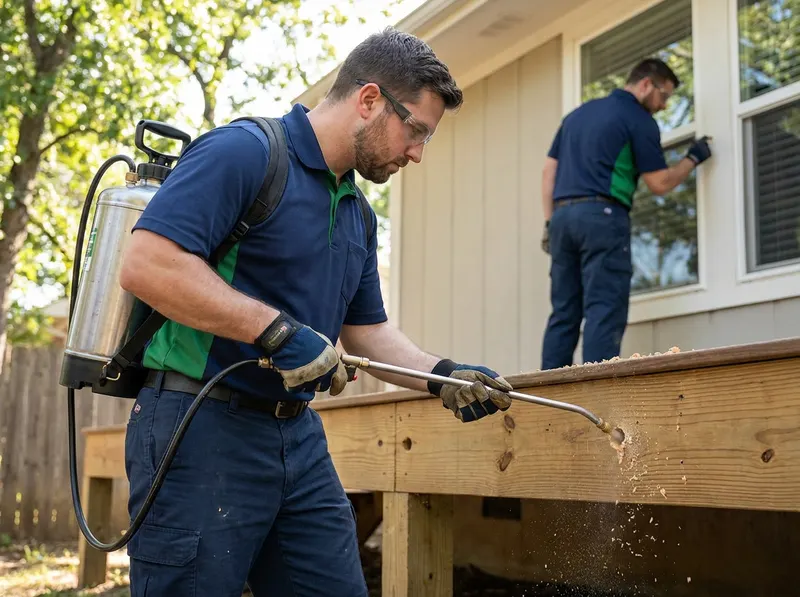
Carpenter ant structural remediation differs fundamentally from generic surface spraying because structural wood excavation targets the nesting galleries rather than foraging trails. In Dallas County, carpenter ants (primarily *Camponotus pennsylvanicus* and *Camponotus modoc*) do not ingest cellulose for nutritional value like subterranean termites; instead, worker ants physically chew parallel galleries along the wood grain to shelter satellite broods. According to the Texas A&M AgriLife Extension, structural satellite colonies establish in wall voids where plumbing leaks or flashing defects elevate wood moisture above 15%. Eliminating these interior nests requires pinpointing moisture boundaries and hollow acoustic voids rather than coating baseboards with repulsive broad-spectrum pyrethroids, which merely scatter parent colonies into unaffected room cavities. Homeowners in mature neighborhoods such as Lakewood and Kessler Park frequently discover fine, sawdust-like wood shavings (frass) containing insect fragments accumulated beneath window aprons or crown molding, signaling extensive wall hollows behind intact paint layers.
Effective remediation mandates an integrated three-step operational workflow: 1. Structural diagnosis using thermal moisture detection to isolate damp framing timbers. 2. Direct injection of non-repellent transfer chemistry or desiccating dusts into wall voids, conforming to EPA pesticide registration standards. 3. Physical envelope exclusion to sever tree canopy bridges and foundation sill penetrations. When selecting treatment paths, Dallas property owners must weigh topical barrier control against localized structural injection. Exterior-only barrier treatments suit minor, warm-season forage intrusions where structural integrity remains uncompromised; however, once frass accumulates internally or nocturnal rustling sounds occur inside wall studs, exterior spraying fails to penetrate hidden nurseries. Deep void injection trades immediate non-invasive speed for invasive, surgical drywall or sill drilling (3/16-inch ports) to reach the heart of the colony, preserving load-bearing members from continued excavation. MeadowLock Pest Services verifies the primary moisture trigger during every remediation, evaluating attic rooflines against guidelines maintained by the International Association of Certified Home Inspectors.
Local architectural conditions across Dallas dictate specialized remediation tactics. Older pier-and-beam foundations in Oak Cliff and the Bishop Arts District expose crawlspace subfloors to ambient humidity from the Trinity River watershed, creating prime habitat for moisture-loving satellite nests. Conversely, modern multi-story framing in Uptown and perimeter additions in Preston Hollow, Lake Highlands, and Far North Dallas frequently encounter roof leaks around parapets and recessed dormers that allow ants to bypass ground treatments entirely. Per structural standards published by the American Wood Council, damp lumber experiences accelerated mechanical stress when hollowed out by insect galleries, raising risks for window and door frame shifting. Remediation protocols incorporate boundary modifications verified against Dallas County public health guidelines and environmental management rules outlined by the Texas Commission on Environmental Quality. MeadowLock Pest Services installs clean mechanical sweeps, seals masonry gaps according to the International Code Council structural standards, and trims intersecting vegetation per International Society of Arboriculture pruning recommendations to establish durable structural boundary control.
Every job gets a firm, written price after a free on-site visit.
For standards, safe disposal, and service guidance on pest control services in Dallas, TX, useful references include U.S. EPA, ENERGY STAR, U.S. Dept. of Energy, Consumer.gov, U.S. Census Bureau, and Google Maps. General consumer and small-business resources are available from USA.gov, Better Business Bureau, FTC Consumer Advice, U.S. Small Business Administration, and Ready.gov.
Tell us about your carpenter ant structural remediation job in Dallas and we'll send a clear, written quote, usually the same day.
 MeadowLock Pest Services