Roof rat infestations across Dallas residential corridors stem directly from arboreal density, architectural design, and proximity to riparian zones. In established neighborhoods such as Lakewood and Lake Highlands…
Roof rat infestations across Dallas residential corridors stem directly from arboreal density, architectural design, and proximity to riparian zones. In established neighborhoods such as Lakewood and Lake Highlands near White Rock Lake, mature pecan and live oak canopies provide uninterrupted aerial highways straight onto cedar shingle and tile roofs. Properties situated near the rolling topography of Kessler Park and the limestone bluffs of Oak Cliff face similar pressures, where Norway rats and roof rats exploit crawl space foundation gaps and masonry weep holes. Dallas County environmental conditions create extended breeding windows, causing rodent colonies to seek thermal shelter inside conditioned attic spaces during seasonal temperature spikes. When animals settle in wall voids, gnawing behavior damages electrical wiring jackets and disrupts insulation batts, creating immediate residential safety hazards that simple snap traps cannot resolve.
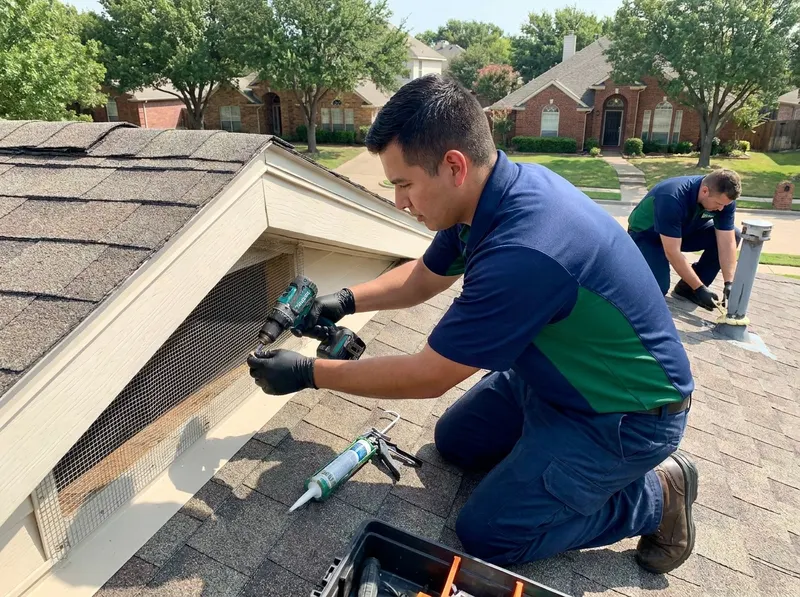
Structural exclusion establishes an impassable perimeter boundary, separating residential interiors from pest populations. According to the Internet Center for Wildlife Damage Management, rats can compress their ribcages to squeeze through structural openings measuring merely one-half inch wide, making superficial foam applications entirely ineffective against persistent incisors. MeadowLock Pest Services utilizes heavy-gauge, corrosion-resistant metals engineered to outlast rodent gnawing pressure, adhering strictly to CDC structural rodent-proofing standards. Field technicians inspect the critical roof-fascia junction, sealing open builder gaps and ridge vents using hardware cloth fastened with self-tapping steel screws. Down below, ground-level penetrations for air conditioning line sets and gas conduits receive heavy-duty escutcheon plates and structural backer rod sealed with elastomeric coatings, as outlined in pest exclusion methodologies supported by the UC Davis IPM Program.
Deciding between recurring rodenticide bait contracts and permanent physical exclusion hinges on long-term safety and structural containment. Exterior bait stations disperse anticoagulants across an open environment, which can introduce secondary poisoning risks to neighborhood pets, raptors, and native wildlife governed under the U.S. Fish and Wildlife Service. Furthermore, poisoned rodents frequently expire within inaccessible interior wall cavities, resulting in severe biological odor issues, secondary dermestid beetle infestations, and airborne contaminants monitored by the EPA Indoor Air Quality Division. Mechanical exclusion combined with interior snap trapping resolves the infestation within the structural envelope without chemicals, leaving no lingering hazards inside the home. For multi-story estates in Preston Hollow or historic brick cottages in the Bishop Arts District, structural hardening prevents future seasonal re-entry while protecting living zones from chemical exposure.
Decontamination and restoration follow the perimeter sealing phase to neutralize biological attractants left behind in attics. Rodent urine deposits and droppings contain pheromones that draw outside colonies toward historical nesting zones, while also introducing particulate risks addressed in environmental safety protocols from the Occupational Safety and Health Administration. Technicians apply enzymatic sanitation sprays to remediate soiled joists, framing lumber, and attic floorboards. Where ductwork has been breached, restoring thermal envelopes aligns with building code performance guidelines established by the Department of Energy Building Technologies Office and the International Code Council. Structural exclusion ensures that once the interior population is trapped out and sanitized under standards maintained by the National Pest Management Association and the Texas Department of Agriculture, the home remains secure against subsequent generations.
Every job gets a firm, written price after a free on-site visit.
For standards, safe disposal, and service guidance on pest control services in Dallas, TX, useful references include U.S. EPA, ENERGY STAR, U.S. Dept. of Energy, Consumer.gov, U.S. Census Bureau, and Google Maps. General consumer and small-business resources are available from USA.gov, Better Business Bureau, FTC Consumer Advice, U.S. Small Business Administration, and Ready.gov.
Tell us about your roof rat and rodent exclusion job in Dallas and we'll send a clear, written quote, usually the same day.
 MeadowLock Pest Services